Here’s why it took off. And the real message behind it …
Written by a human (me), not Ai.
One of my videos on YouTube just passed 50,000 views. It’s called Never Use a Stop Loss, but it’s about much more than that.
Not exactly viral by YT standards. But the message really matters if you want to build wealth properly, and passively.
💡 For more insights like this – straight to your inbox – leave your details in the box at top of this page ☝🏼
Before we get into it .. What is a stop-loss ?
It’s an instruction you leave with your investment platform: if a share or ETF falls by, say, 10%, it’s sold automatically.
I can assure you that, if you’re a passive long-term investor, you don’t need a stop-loss.
Moreover, having one often means sellingat a low, when you should be buying (evidence below).
Further down, I share a much better habit our investors use to buy at the lows. And how we get paid income while we wait to buy lower.
Why did this video get traction ?
It challenges a common assumption. A stop loss sounds protective so why wouldn’t you have one?
In my fund management days I never used one. Nor did many colleagues. We knew it rarely served its purpose and gave a false sense of security.
Why? A stop-loss turns a temporary dip into a permanent loss. And those dips are quite common …
How often do sell-offs happen ? (see chart below)
Almost 100 years of data show stockmarkets have experienced 3% dips 7.3 times a year, on average. 5% declines 3.4 times a year. And 10% sell-offs 1.1 times a year …
So market declines are normal and temporary – even during years that end up as big gainers.But bigger falls are much rarer. A 15% sell-off occurs once in 2 years, on average. And a 20% bear market once in 3½ years.
That‘s the key point: most 10% falls don’t become 20%. Since 1928, 2/3 of them never became -20%.
Most of the time, a 10% stop-loss just sold you out in a normal correction, which then recovered without you being invested.
Recoveries are normal – as shown in the video …
The data shows that most 10-20% declines fully recover within a year. And markets rise, on average, in 8 years out of 10.
You saw examples of each in the video. The Covid crash in 2020 and the tariff sell-off in April 2025 were sharp falls. Both times, a 10% stop-loss would have sold you out in the panic. And both times, the market went on to recover and make new highs within months.
Which is the real problem. A stop-loss gets you out but never tells you when to get back in. And in my experience, nobody can time that consistently. Not Warren Buffett, and certainly not the pros.
So where does the stop-loss habit come from? Trading …
Short term traders use them frequently, especially with volatile stocks. That’s when you might consider a stop-loss.
Or if you were playing a short term event – eg taking a bet on Nvidia’s next earnings announcement.
But passive investors should never use a stop-loss for set-and-forget positions (which comprise the majority of our portfolios).
For investors, as opposed to traders, the wealth-creation question is simple …
Would you rather SELL or BUY at a low ?
A stop-loss makes you sell after prices have fallen.
But when quality assets go on sale, a long-term investor should be doing the opposite …
How we help our investors buy lower …
It’s called pound cost averaging. Very simply, it means drip-feeding your money in over a set period, Vs investing all on day one.
Say you have £60,000 to invest. You might put in £10,000 a month in 6 monthly instalments. If the market dips in month 3, that month’s £10k buys more shares. So the dips start working in your favour.
One of our clients was drip-feeding a large cash sum into the market when Covid hit. He felt uncomfortable buying as the world was seemingly ending. But he kept going with his monthly instalments. In the end, he had bought into the market at highly attractive levels.
Pound cost averaging lets you BUY at the lows. Stop-losses make you SELL at the lows.
We show our investors exactly how to set this up, step by step: what to buy, through which platform, and over what period.
Finally, the best bit: buy lower, AND get paid income to wait …
Many of our investors who are still building their portfolios take this a step further using options.
Just like property: imagine offering below the asking price on a house you’d be happy to own, and the seller pays you every month while they decide.
Options work in the same way: You choose a quality ETF/share that you’d like to buy anyway, but at a price below today’s level that you’d happily pay.
You then get paid monthly income for agreeing to buy at that price (the strike price). If the market price falls to your strike price, you buy there. If it doesn’t, you keep the income.
Whichever way the share price goes: up, down or sideways, you keep the income anyway.
Recently, one of our clients wanted to buy a Bitcoin-related ETF but was hesitant after a run-up. So he used options to commit to buying at a lower price, receiving 3.6% in one month while he waited (Bitcoin ETFs are more volatile, hence the higher income level).
The catch: if the price falls below your chosen level, you still buy at your price. Which is why we only do this on ETFs and shares we’d be happy to own anyway.
If you haven’t seen the video yet, watch it here. (The options part starts around 8 minutes in.)
In Summary …
Sell-offs are common, including during up-years
Recoveries are normal too. But a stop-loss prevents you participating in one
Most 10% falls don’t become 20% declines. So a typical stop-loss often sells you out at the worst time
Pound cost averaging lets you BUY at the lows (Stop-losses make you SELL at the lows)
Options let you buy lower (if the price falls) and get paid while you wait
Sitting on cash and not sure how to put it to work, without trying to time the market? Book a 15-minute call and we’ll share a lower-risk way.
Ps
NOBODY will care about your money like YOU will …
The Investment Accelerator has transformed how thousands of people now invest. Creating diversified passive portfolios for Growth and Recurring Income.
Manish Kataria is a CFA-qualified former fund manager with 20+ years in professional investment management. He managed portfolios at JP Morgan and other London investment houses in, across equities, ETFs, and options.
He’s also a property investor (HMOs, BTLs).
Through Invest Like A Pro, he teaches private investors to easily manage their own portfolios to professional standards. Without needing a financial advisor, saving thousands in fees.
Want More Insights from me ?
Did you know these emails are just one part of what I share?
Across the week, more content goes out to help investors build wealth, income, and avoid common mistakes.
Get More Value – Start here:
Subscribe to my YouTube Channelfor investment strategy, walk-throughs, and deeper dives.
Each platform has a slightly different angle but share the same goal:
Helping you invest better with less stress.
Over time, the knowledge you gain could compound into something powerful.
Always Remember:
Time in the Markets always beats timing the markets
Stay Diversified
Minimise those leakages: Fees, Inflation, and Taxes
Financial Markets are a great source of recurring income
ETFs, Balanced Funds and Options achieve all the above
Being educated helps you outperform 99% of the population
… to ensure your investments work for YOUR financial freedom (not someone else’s)
And …
For more guidance, our Investment Accelerator will help you implement all of this in a step-by-step way.
Thousands of people have learnt how to diversify and pound-cost-average into low-cost, set-and-forget ETFs & Funds for inflation-beating growth. And Options to create recurring income.
– Don’t take the above as advice as it may not apply to you personally
– Your Capital is at Risk
– You may not be covered by the FSCS
– Anything mentioned in a podcast or in a previous article was valid at that time and may not continue to be now
Stockmarket Investment Accelerator … Step-by-Step Training to Diversify your Wealth and Create Passive Compounding in the Markets (click image below for details …)
About Me
Manish Kataria is a Fund Manager. A CFA-qualified professional with 18 years’ experience in investment management and UK property. He has managed investment portfolios for JPMorgan and other blue chip investment houses. Asset classes managed include Equities, ETFs, Bonds, Funds and Options. Within property, he invests in and owns a range of assets including developments, HMOs, BTLs and serviced accommodation. InvestLikeAPro was set up so anyone can invest like a pro.


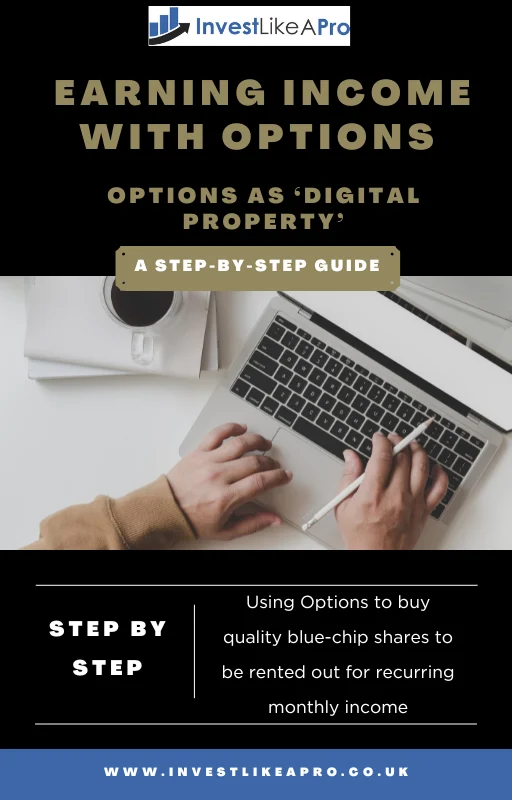
 We show our investors exactly how to set this up, step by step: what to buy, through which platform, and over what period.
 Subscribe to my
  Follow my
  Get my

 I’m also